What I’ve learned about the universe — and people — through my camera lens.
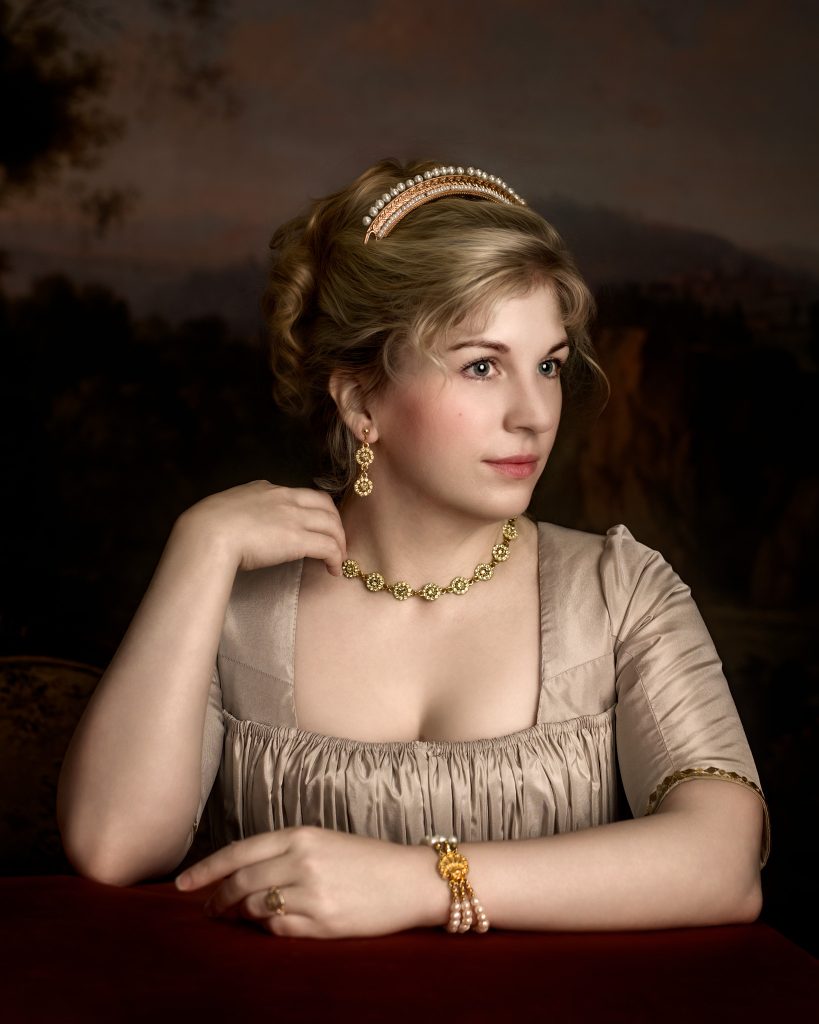
There’s a philosophy I hold to that feels more true the longer I ponder it: Beauty will save the world. If you follow me at all you have probably heard me say it at some point.
I believe that beauty is the foundation of the universe, and love is what it feels like to encounter it.
Many traditions have placed love at the center of existence. Across centuries and cultures, human beings have independently arrived at the same conclusion; that love is not just an emotion but a foundational force. And they’re not wrong. But I think it’s more layered than that.
The world has always reached for love and always been drawn to beauty. Beauty is the universe’s essence. Love is how we experience it. They’re not contrary, they’re complimentary. Love is what arises in consciousness when it encounters beauty. It is the response, the recognition, the resonance.
It’s not a lesser thing. If anything, it’s more precise. It explains what a lot have taken for granted: why love arises at all.
But, what about beauty built on suffering?
I can’t write about beauty and show you historical aesthetics without naming the hardest thing: so much of what we call beautiful from the past was built on exploitation. The grandeur of certain estates. The elegance of certain eras. The very tradition of formal portraiture itself, which for most of history was reserved exclusively for the wealthy and the powerful. This is a genuinely profound tension, and it deserves to be taken seriously rather than explained away.
If beauty is foundational and love is its natural echo, how do we account for the fact that the people who created and inhabited that beauty so often responded not with love, but with domination? I think the answer is that the failure was never in beauty itself. It was in the scope of perception.
The person who found a grand estate beautiful while others suffered within it was only perceiving beauty within a narrowly bounded circle. His land, his wealth, his aesthetic. He was blind, willfully or otherwise, to the full beauty of the human beings around him. Love didn’t follow because the beauty of the other was never actually seen. Yes, the oppressor saw beauty in objects, in architecture, in some people but not in persons unlike himself. That’s not beauty doing harm. That’s beauty being withheld.
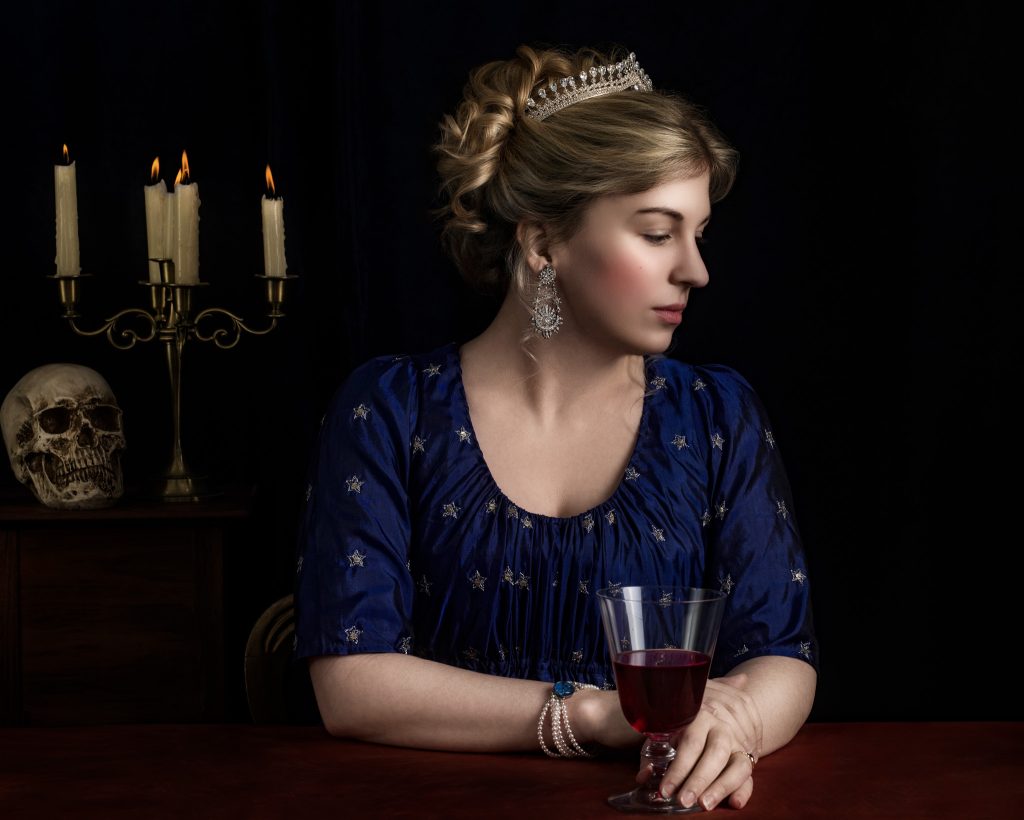
Beauty and the witnessing of beauty are not the same thing. Beauty may be woven into everything, but that doesn’t mean every human being is capable of receiving it fully at any given moment in history. Trauma, power, ideology, and self-interest all distort perception. A person can be surrounded by beauty and still be closed to it. The capacity to perceive beauty broadly and without hierarchy is itself something that has to be cultivated. The same can be said for love, which makes sense since it echos from beauty.
This is why to me, the historical aesthetic is not about nostalgia. It’s a corrective. A democratization. Every person who sits in front of my camera is being offered the same gaze, one that sees them as worthy of being rendered timeless, luminous, historically significant. That was never the intention of the eras I’m drawing from. But it is my intention now.
I’m not celebrating the exploitation that produced the aesthetic. I’m reclaiming the aesthetic and redirecting the gaze toward everyone, which is where it should have always been pointed. The beauty was always there in all people. The past simply refused to look.
Admittedly, when I started in historical portrait photography, I was drawn to just the aesthetic. The colors and textures, the light, the timeless quality of it, the way a portrait painting or early photograph can dissolve the distance between a person and something ancient and enduring. But what keeps me here, session after session, is something I didn’t anticipate: the beauty that surfaces in people when they step outside of the present moment. All kinds of people. Every time.
There’s something magical that happens when I’m doing a session. The modern noise falls away. The performance of everyday life, the curated self, it all quiets. And what’s left is something that has always been there, waiting to be seen. It’s not about the props or the costume or the editing. It’s beauty. The kind that exists independent of trend or era. It was there in the 1790s and it’s here now. My job is simply to notice it and hold still long enough to catch it.
People often come to a portrait session thinking about how they’ll look. They carry old stories, “I’m not photogenic,” “I don’t know how to pose.” And I understand that. We’ve all been taught to present ourselves rather than reveal ourselves.
But somewhere in the middle of a session, something shifts. A genuine laugh. A moment of stillness. A gaze that goes somewhere far away. And I’ll feel it , a warmth, a fullness, and I’ll realize that what I’m feeling is love. Not romantic love, not even personal love. Something more elemental. The love that surfaces when you’re in the presence of beauty you didn’t manufacture and can’t quite explain. It’s that ache that you can’t articulate but that you know is good. I feel it every time. That’s the philosophy made real: beauty first, love as its echo.
What moves me most is the moment a subject sees their portraits for the first time. There’s often a pause, a quiet, almost surprised recognition. They’re not seeing what they expected to see. They’re seeing something truer.
I think what they’re recognizing is their own beauty — not constructed, not filtered, but witnessed. And in that moment, something like love moves through them too. Love for themselves, maybe for the first time in a long while. Because when beauty is truly seen, love is the only natural response.
I didn’t set out to make photographs that felt like philosophy. But the longer I do this work, the more I believe that’s exactly what they are. Each portrait is a small argument for the idea that beauty is foundational. It is woven into people, into light, into the way the past and the present can briefly hold hands, and that love is what we feel when we’re lucky enough to witness it. All of us. Every time. Without exception.
Michele
Leave a Reply